Meet the real Tom Steyer
Billionaire hedge fund manager.
Private prison investor.
Oil and coal profiteer.
Investor in a Trump-boosting crypto firm.

Tom Steyer wants Californians to believe he’s a progressive champion. But the truth is simpler– he made his fortune betting on industries that hurt communities and polluted the planet, all while shielding millions from taxes.
Now he’s using that money to try to buy the California governor’s office and hoping Californians will just hand him the keys to our state.
But California is not for sale.
Tom Steyer Made Millions Investing in Private Prisons and Immigrant Detention
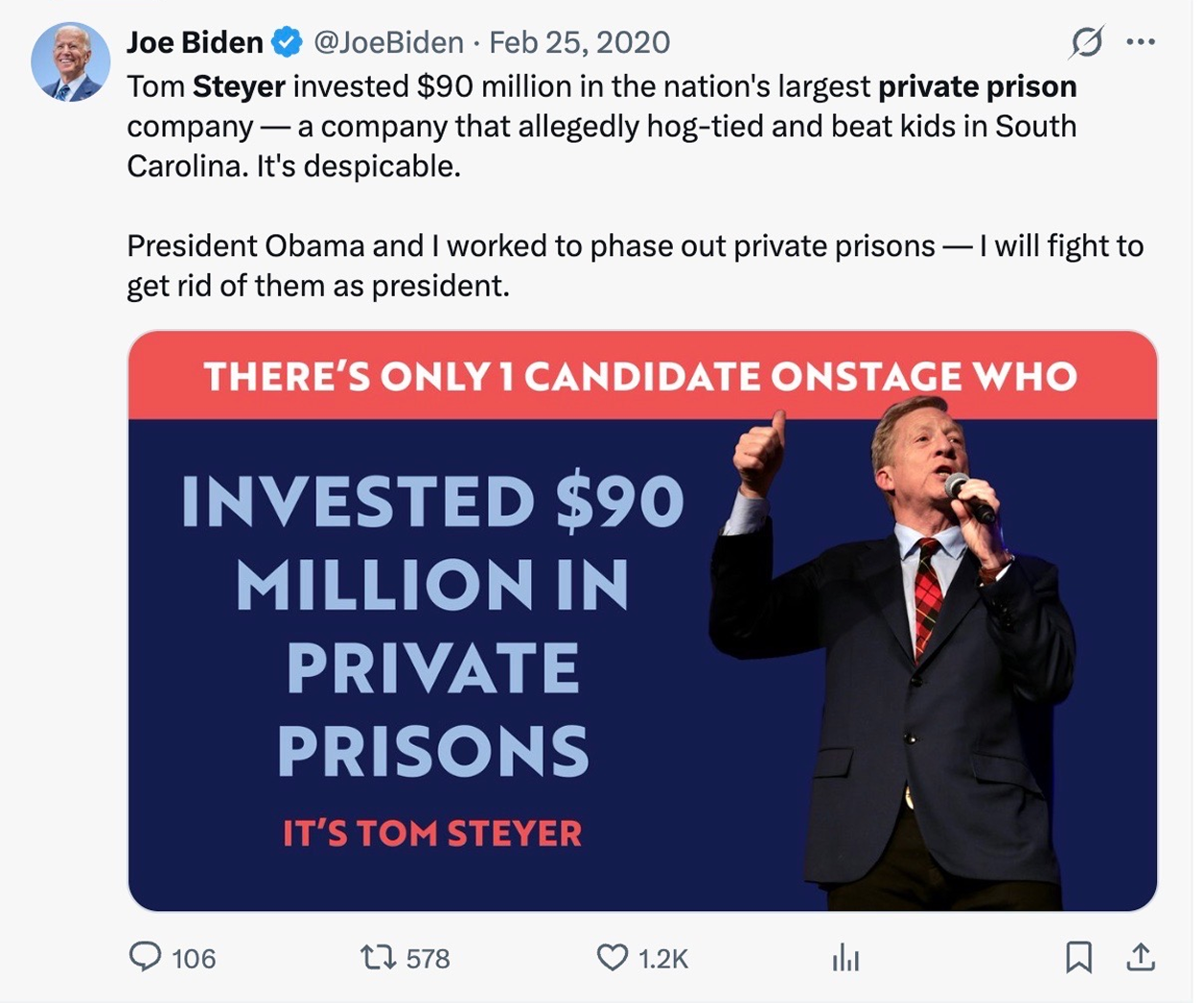
- Tom Steyer’s hedge fund invested heavily in the nation’s largest private prison company, a major operator of immigrant detention centers.
- Under Steyer’s leadership, Farallon Capital expanded its stake in Corrections Corporation of America from about $1.9 million to nearly $90 million, eventually owning roughly 5.5% of the company.
- When activists raised concerns about racial injustice, human rights abuses, and mass incarceration, Steyer defended the investment, saying he was “proud of the work we have done.”
- The company Steyer backed continues to operate immigrant detention facilities and has received billions in federal contracts, including with ICE.
Tom Steyer Built His Fortune on Dirty Energy and Toxic Mining
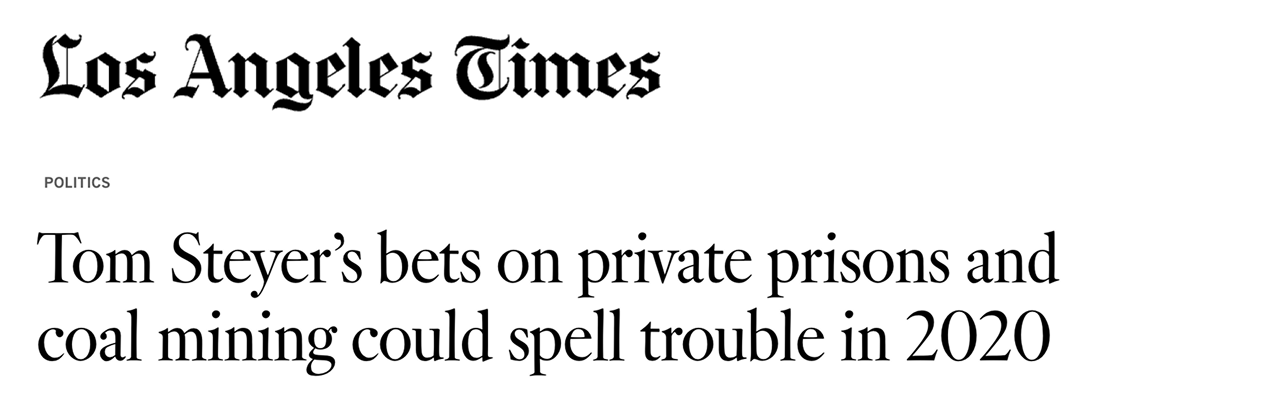
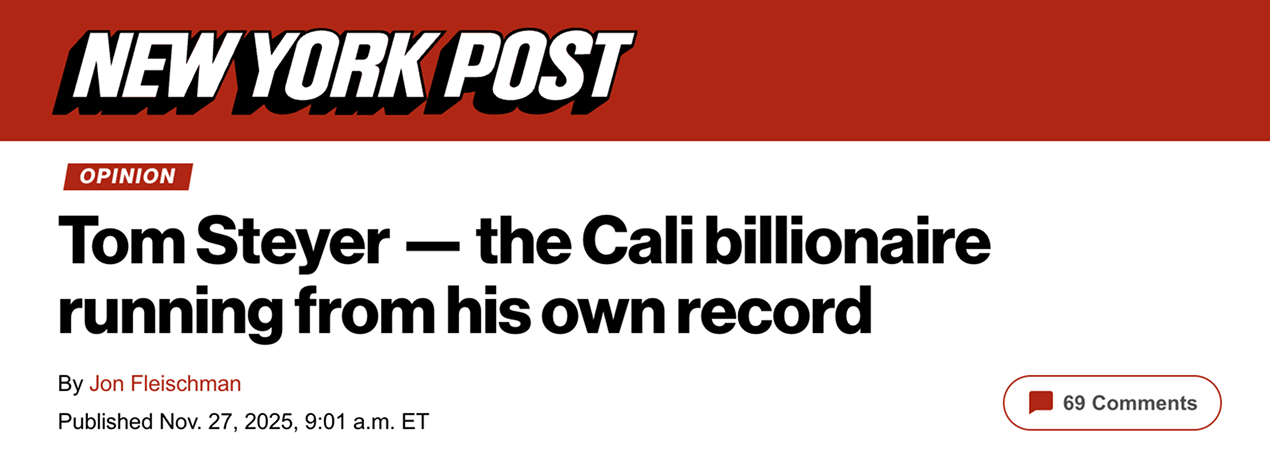
- Before Tom Steyer rebranded himself as a climate activist, he spent decades getting rich off some of the dirtiest industries in the world.
- Under Steyer’s leadership, Farallon Capital poured hundreds of millions of dollars into coal mines and coal-fired power plants while placing multimillion-dollar bets on oil and gas giants like Chevron, ExxonMobil, and Schlumberger.
- Steyer’s investments allowed the coal companies to grow rapidly during a period of rising coal prices, leading to a massive expansion of global thermal coal production.
- According to the New York Times estimates, the combined mines have increased their annual production by about 70 million tons since they received money from Farallon— that is more than the amount of coal consumed annually by Britain.
- Today, Steyer’s climate investment firm, Galvanize, backs heavy industry through MP Materials, which operates a massive open-pit mine in the Mojave Desert that generates toxic waste and can contaminate up to 5 billion gallons of water annually.
- Galvanize is also heavily invested in Fervo Energy, which uses oilfield technology, including horizontal drilling and fracking, to generate its geothermal energy.
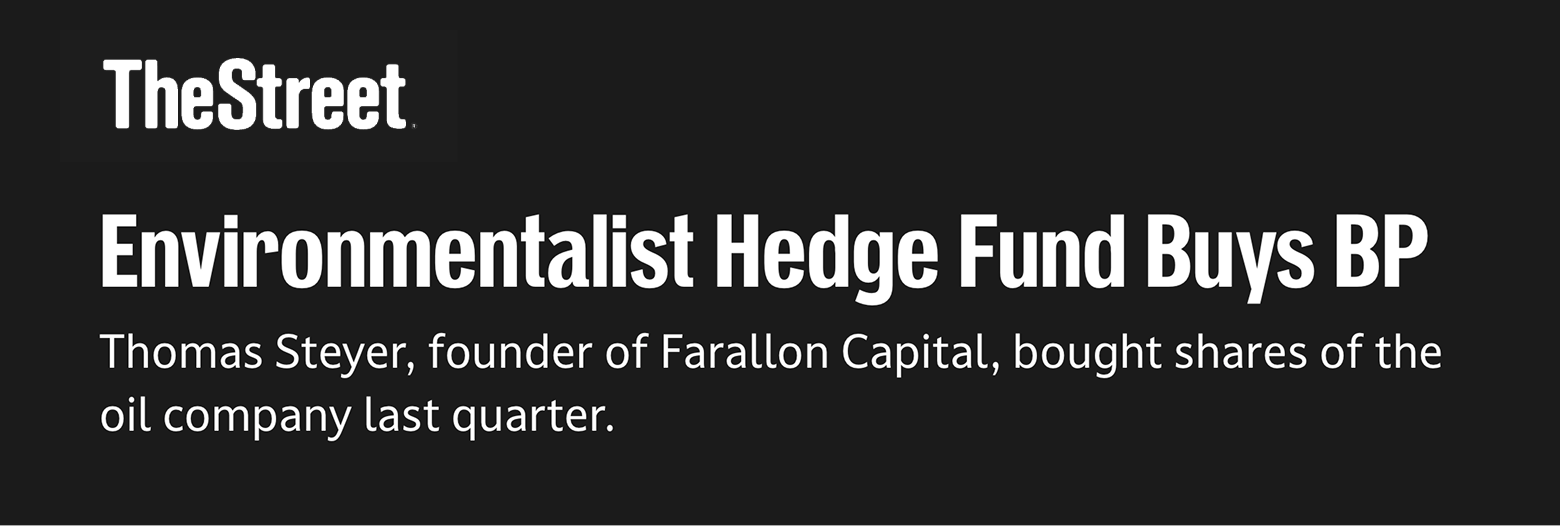
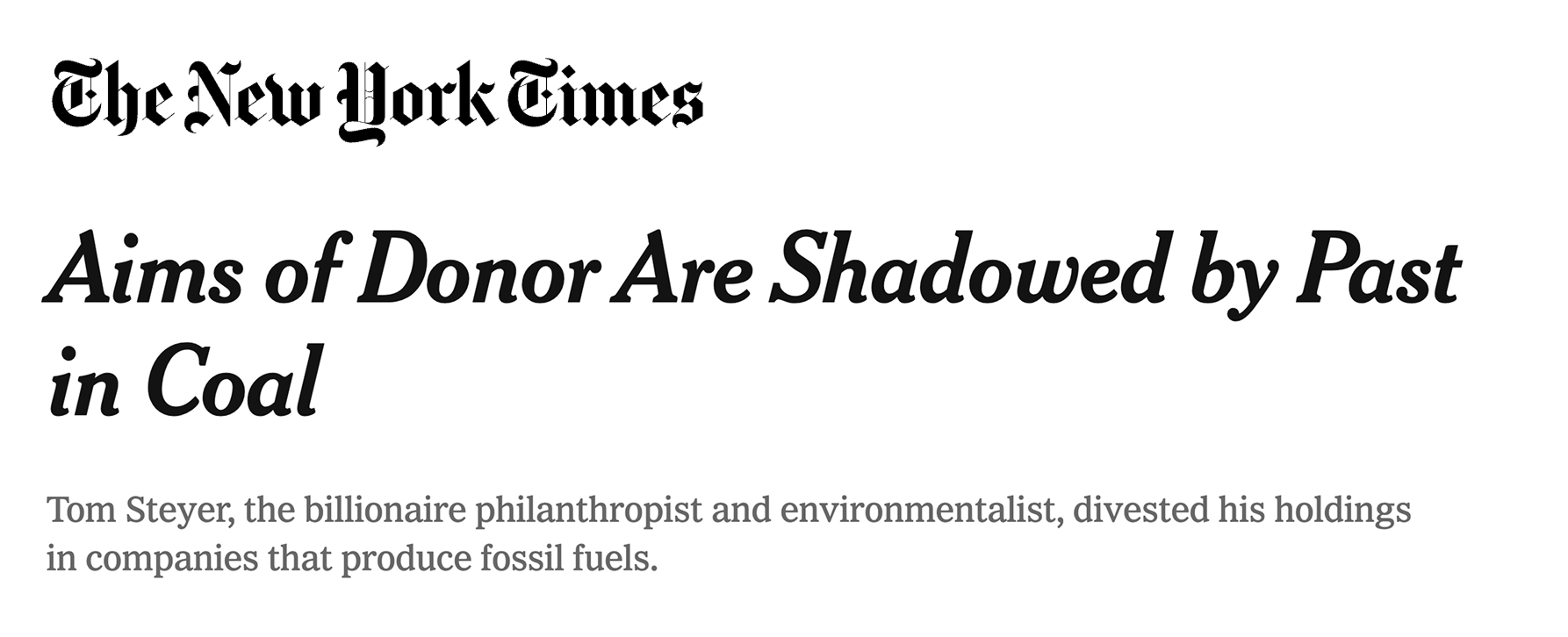
- Despite his repeated claims that he’d divested completely from fossil fuel polluters, multiple outlets, including The New York Times reported Steyer continued to maintain investments connected to oil and gas companies.
Tom Steyer Wants Credit for Taking on Big Tobacco and Donald Trump. He Invested in Both.
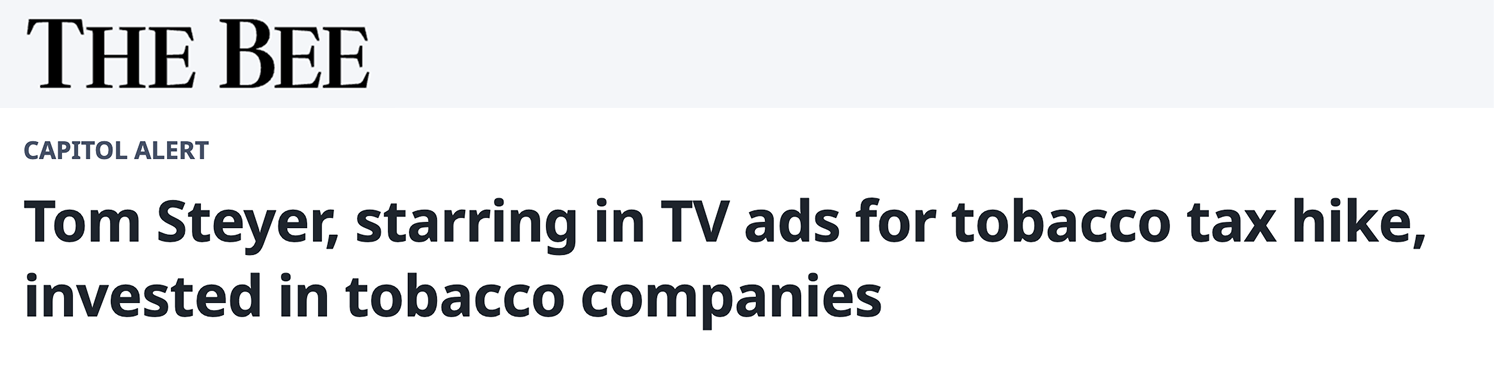
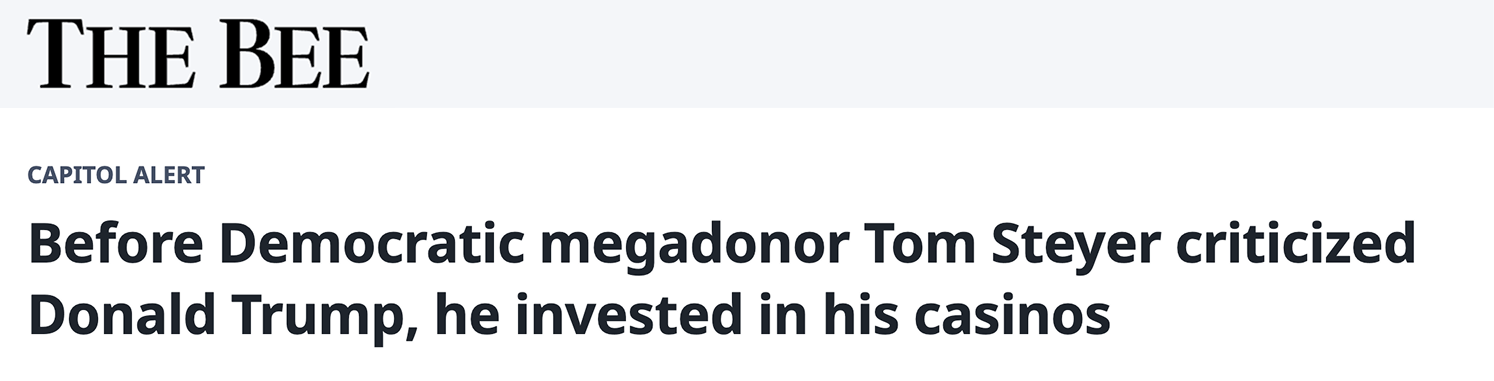
- Tom Steyer wants credit for taking on Big Tobacco and positioning himself as a leading critic of Donald Trump. But before the speeches and ads, Steyer’s hedge fund was making money off both.
- Federal filings show Farallon held shares in UST Inc., whose subsidiaries made products like Copenhagen and Skoal, and invested in funds with holdings in National Tobacco Company and an investor group linked to Indonesian cigarette giant PT Djarum.
- At the same time, Farallon invested in Trump Entertainment Resorts, the company behind the Trump Taj Mahal casino, as part of a broader portfolio that included hundreds of millions of dollars in gambling companies.
Tom Steyer Profited From PG&E’s Collapse. Now He Wants to Reshape California’s Power Market.
- Tom Steyer says he’ll cut electricity bills by breaking up California’s big utilities and opening the power market to more competition.
- But when California’s energy system collapsed in the early 2000s, Steyer’s hedge fund owned millions of dollars in PG&E stock and increased its investment while the company was in bankruptcy — a Wall Street bet that paid off when the utility recovered and the stock price surged.
- Now Steyer is pushing an energy plan that would open California’s power market — while a Texas energy company backed by his own investment firm prepares to start selling electricity into the state in 2026.
Tom Steyer Says Billionaires Should Pay More Taxes. Just Not Him.
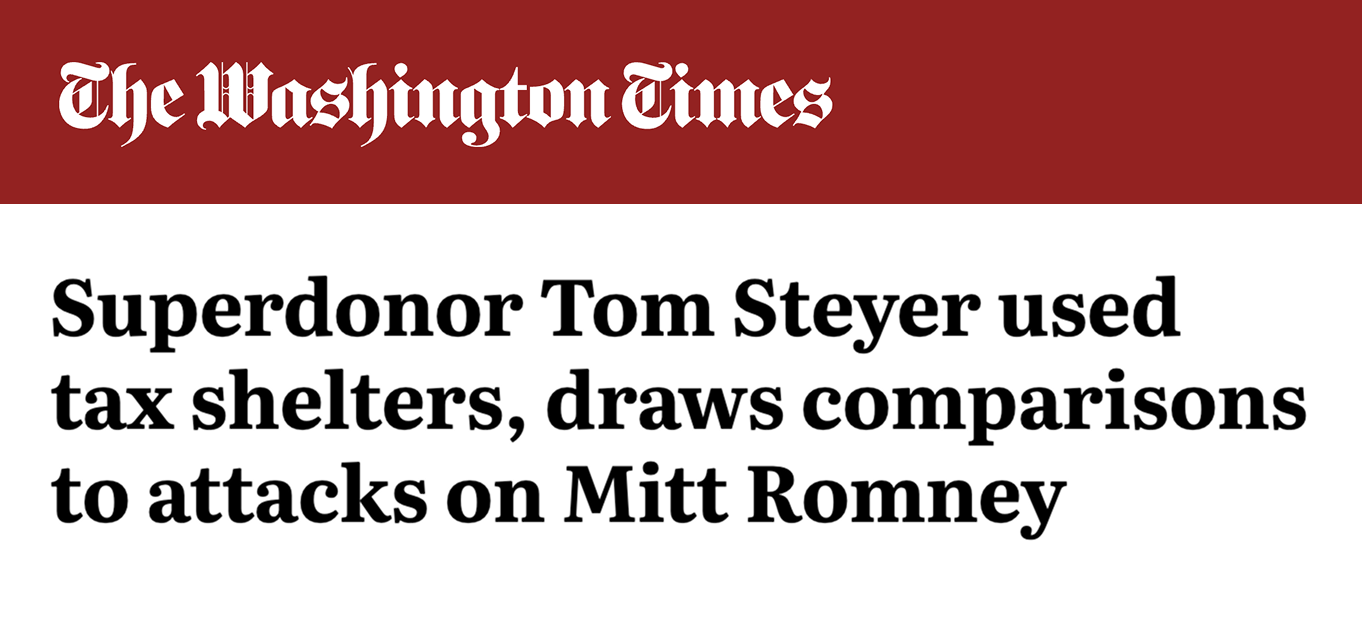
- Tom Steyer loves talking about how billionaires should “pay their fair share.” But when it comes to his own fortune, he plays by billionaire rules.
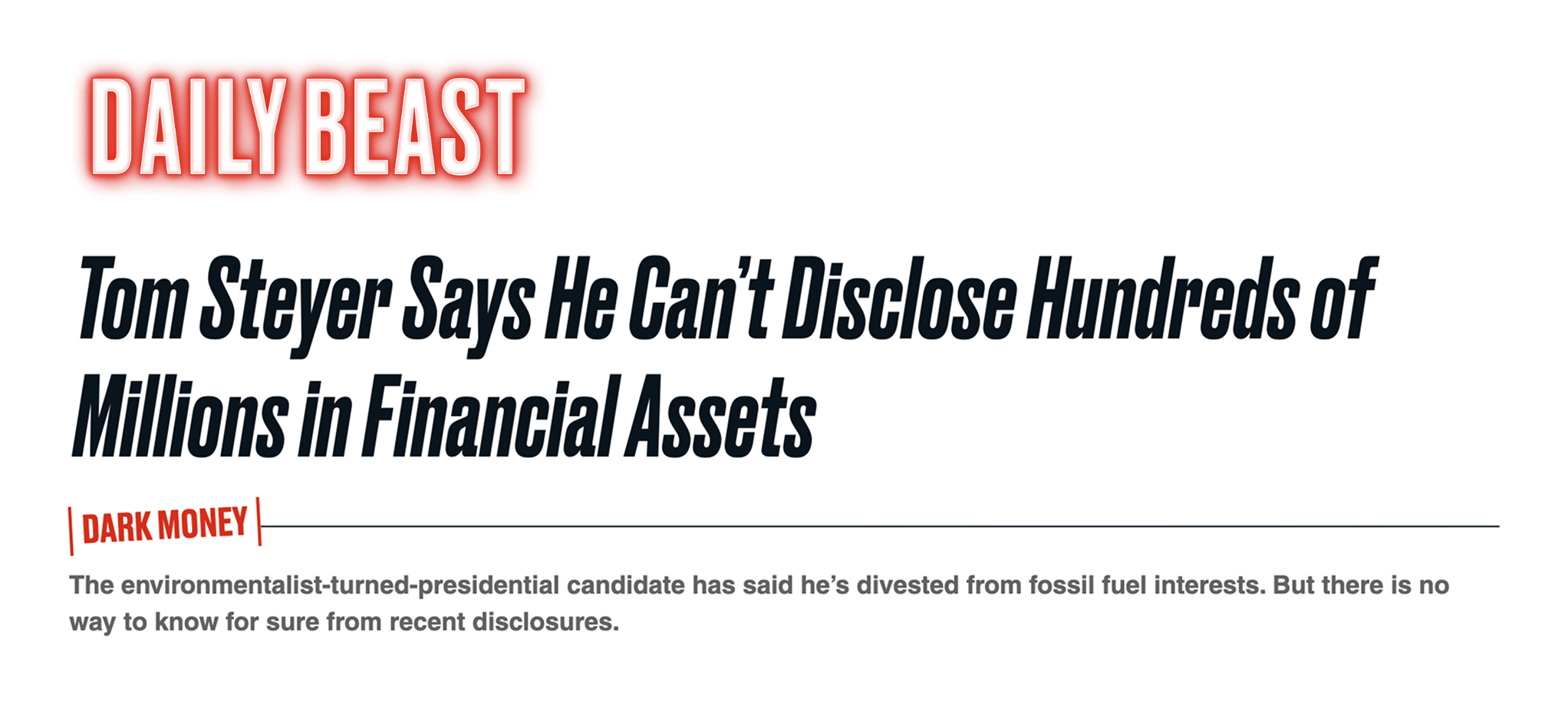
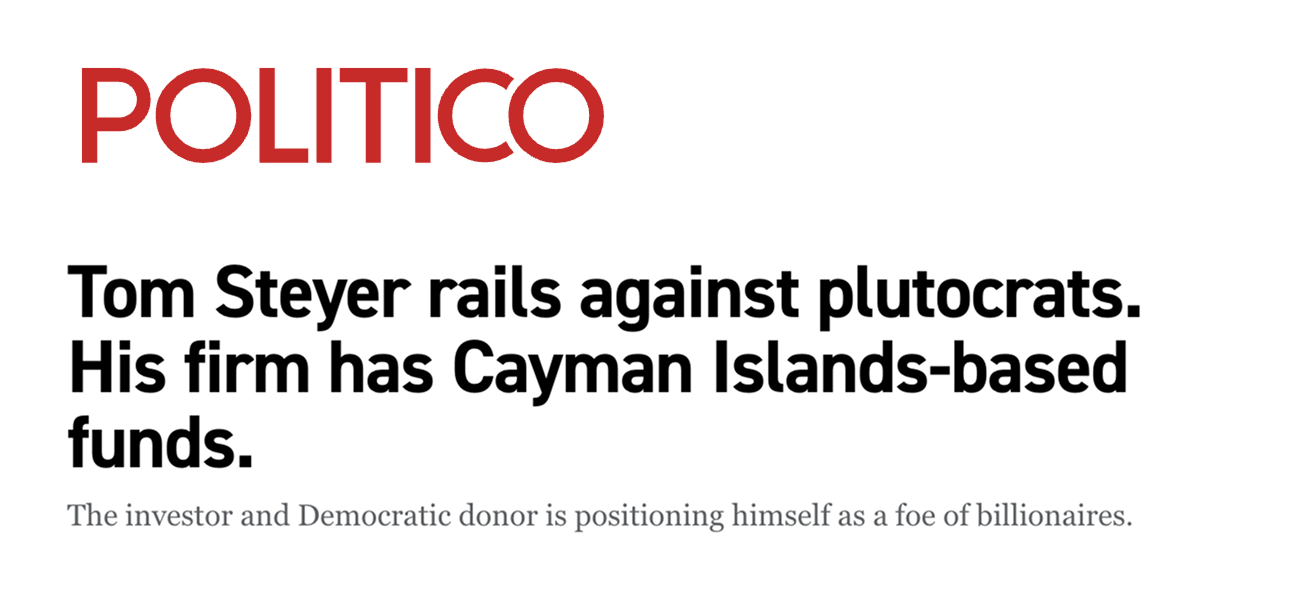
- At Farallon, Steyer structured investments through offshore entities designed to shield wealthy clients from U.S. taxes. In one letter to investors, Steyer explained that their money would flow through an offshore company specifically to avoid taxation.
- Financial disclosures later showed investments in tax havens like the Cayman Islands, Bermuda, and Mauritius. Even while campaigning against corporate tax avoidance, Steyer refused to disclose the underlying assets behind hundreds of millions of dollars in investments.
- And as recently as 2025, the climate investment firm Steyer founded reported a private fund organized in the Cayman Islands. Apparently, “pay your fair share” doesn’t apply to Tom Steyer.
Tom Steyer Invested Over $1 Million in Crypto Company That Bankrolled Trump
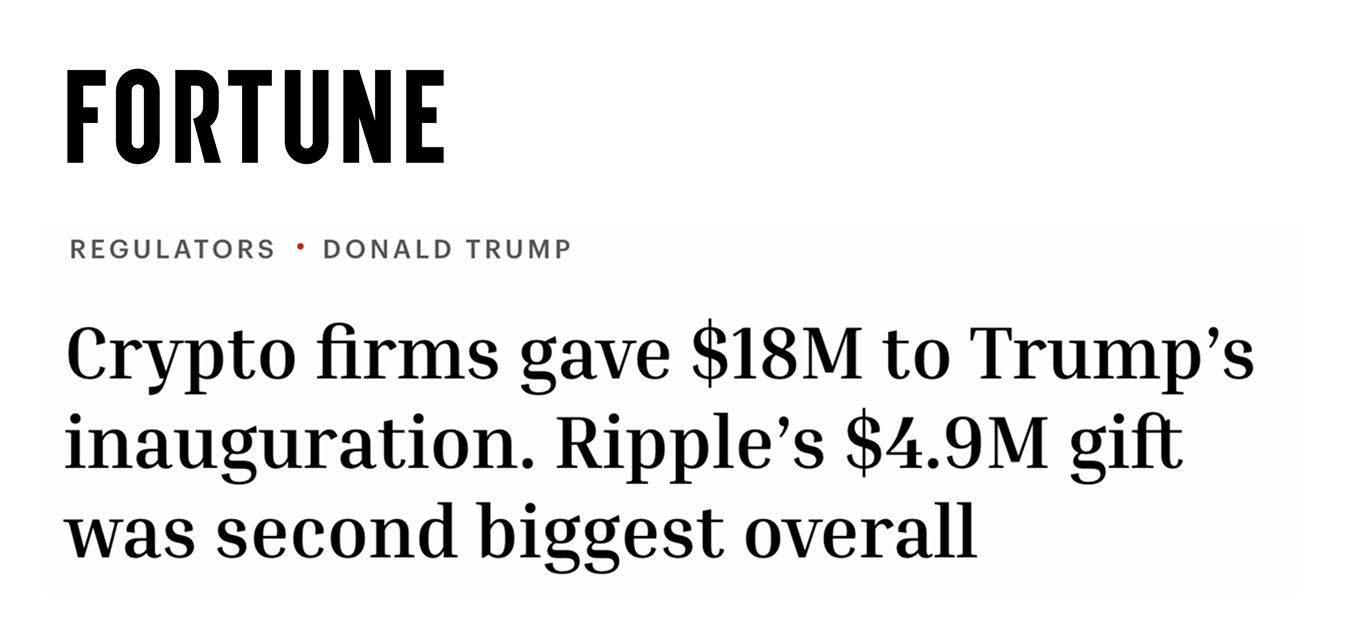
- Tom Steyer holds a stake worth more than $1 million in Ripple Labs, a cryptocurrency company that gave nearly $4.9 million to Donald Trump’s inauguration, making it one of the largest donors.
- Ripple was also a top donor to Trump’s proposed ballroom.
- During Biden’s presidency, Ripple was battling the Securities and Exchange Commission, which accused the company of misleading investors and argued the misconduct was so egregious it could face penalties as high as $2 billion.
- After Trump returned to power, his administration took a dramatically friendlier approach to the crypto industry. Trump’s SEC dropped the government’s appeal in the Ripple case and even tried to slash the company’s penalty. Steyer still holds a seven-figure stake in the company.
Tom Steyer Attacks Out-of-State Corporations While Investing in Them
- Tom Steyer campaigns against “out-of-state corporations that refuse to pay their California taxes.” But his own investment firms pour money into them.
- Steyer’s newest climate investment firm, Galvanize, has hundreds of millions invested in Fervo Energy, a Texas-based geothermal startup building projects in Nevada and Utah and preparing to sell electricity into California beginning in 2026.
- Because the company is based out of state, it can sell electricity to California without paying California taxes.
- Steyer’s investments also include MP Materials, a rare earth mining company in Nevada — a state with no corporate income tax — even as the company operates a major mine just miles from the California border and has already received millions in California tax credits.
- In addition to investing in out-of-state corporations, the firm also runs venture capital funds, structures private credit arrangements, and invests in real estate on a large scale.
Tom Steyer Profited From Drug Distributor at the Center of the Opioid Crisis
- Tax filings show that in 2019 Steyer made up to $1 million in income from stock in Cardinal Health, one of the nation’s largest pharmaceutical distributors, and a company later forced to pay billions over its role in the opioid epidemic.
- Cardinal Health was one of several drug wholesalers accused of shipping massive quantities of prescription painkillers into communities even as addiction and overdose deaths surged across the country.
- In 2022, Cardinal Health, along with AmerisourceBergen and McKesson, agreed to pay $21 billion as part of a $26 billion nationwide settlement resolving thousands of lawsuits that alleged drug manufacturers and distributors helped fuel the opioid crisis.
Tom Steyer Says He Opposes Charter Schools. But He Served on a Pro-Charter School Advisory Board.
- Tom Steyer has tried to position himself as a supporter of public schools and teachers, even claiming he’s “not a supporter of charter schools.” But his record tells a different story.
- Steyer served on the advisory council of a policy group behind a pro-charter school report that promoted expanding charter-style practices nationwide.
- At the same time, Steyer has never attended a public school and sent all four of his children to an elite private prep school, choices far out of reach for most families.
“The men and women who work in California’s state prisons understand that corrections is a public responsibility built on accountability, safety, and professionalism. That is why Tom Steyer’s massive investments in the nation’s largest private prison company is so concerning. Today, that same company continues to run immigrant detention facilities and has received billions in federal contracts, including with ICE. Now Steyer is spending his fortune trying to buy the governor’s race and rewrite his record on criminal justice. Californians deserve a governor who understands that public safety is a responsibility, not a business.”
— California Correctional Peace Officers Association
“In California, even small increases in cost can be the difference between qualifying for a home and getting shut out. That’s why we need a governor focused on making it easier to build homes and expand opportunity for homeownership and more affordable rents — not an inexperienced billionaire pushing property tax hikes that will make California even more unaffordable. When you’re a billionaire, you can afford to put special interests first. That may work politically, but it’s at the expense of working families.”
— California Building Industry Association
“With the cost of a new home already out of reach for too many Californians, the last thing we need is a governor who will drive costs even higher. Tom Steyer is making campaign promises to raise Californians’ property taxes and back policies that will lower home values. These schemes don’t punish the ultra-wealthy — they hit first-time buyers, seniors on fixed incomes, and working families just trying to hold on to what they’ve built. We need leadership that makes it easier to build, buy, and keep a home — not an inexperienced billionaire with little understanding of California’s housing challenges.”
— California Association of ReaLtors
“Working people in this state build the infrastructure, pay the taxes, and live with the consequences of the decisions made in Sacramento. Tom Steyer made billions investing in industries that put profits ahead of workers, backed out-of-state companies that sell into California without paying their fair share, and even supported lending practices that hit working families with sky-high interest rates. Then he walked away when it became politically convenient. You don’t get to build a record like that and pretend you’re on the side of working people.”
— International Brotherhood of Electrical Workers Local 1245